
Best Electric Toothbrush for Braces: Top 3 Compared
By Sarah Chen · September 13, 2026 · 6 min read
This page contains affiliate links. If you buy through them, we may earn a commission at no extra cost to you. As an Amazon Associate I earn from qualifying purchases. Learn more · How we compare
With braces the job changes: plaque collects around brackets and along the wire, and brushing too hard is a real risk when gums are already sore. That narrows the choice to brushes with a pressure sensor, a timer, and a head that reaches around hardware. These three cover the range, and the differences between them are easy to see.
Which One Should You Get?
- Best for most people in braces – Oral-B Pro 1000 – the plain one that does the two things braces actually need: a round head and a sensor that stops you scrubbing.
- Best for sore gums after an adjustment – Philips Sonicare ProtectiveClean 6100 – the gentle one, with three intensities and a reminder that tracks how fast braces wear the head out.
- Best for anyone who needs the coaching – Oral-B iO Series 6 – the round head again, this time with gentler modes and a display that nags until the two minutes are up.
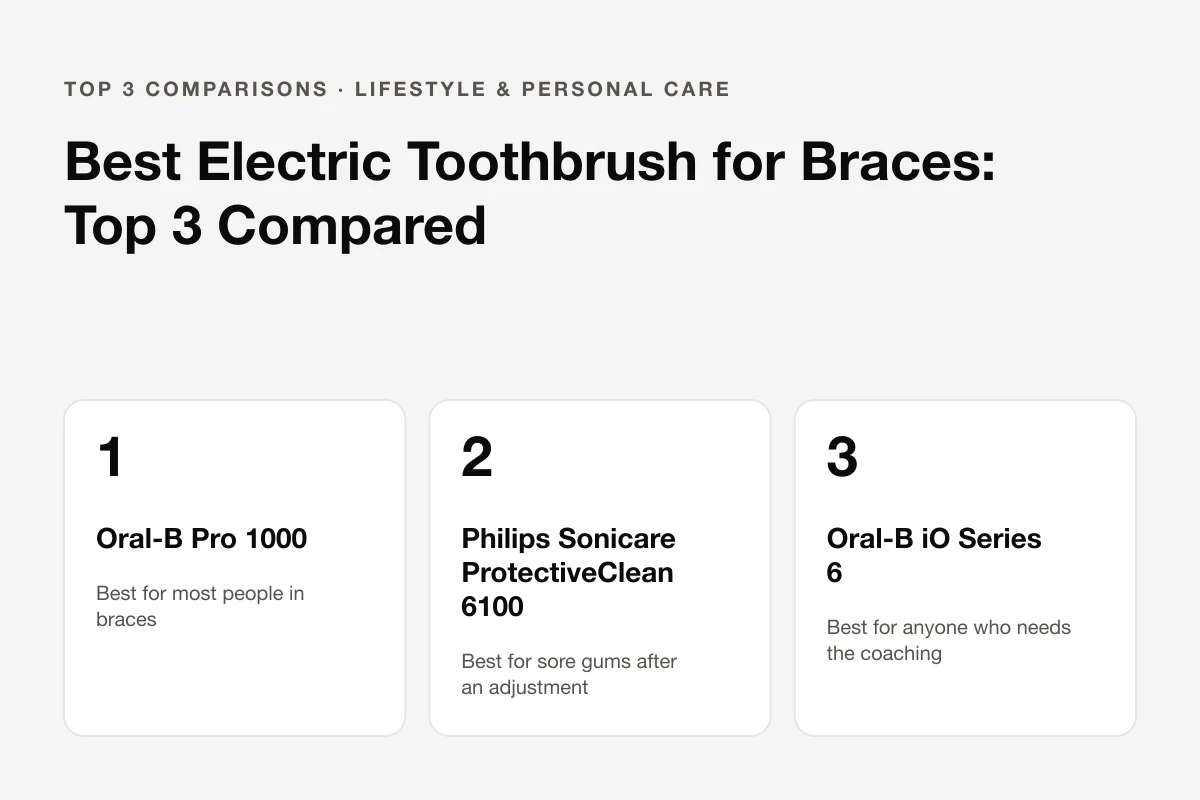
Oral-B Pro 1000, Philips Sonicare ProtectiveClean 6100 and Oral-B iO Series 6
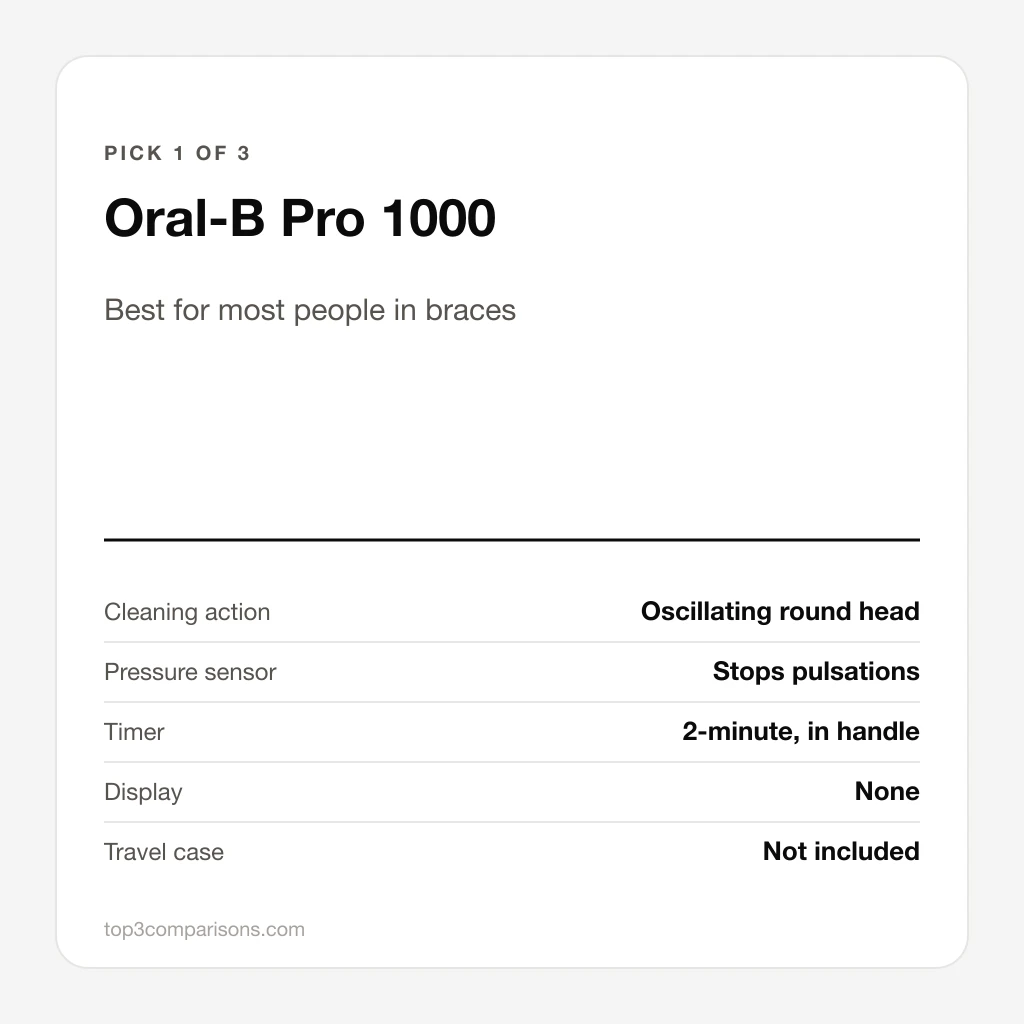
Pros
- Round CrossAction head, the shape Oral-B recommends for braces
- Pressure sensor stops the pulsations when you push too hard
- Two-minute timer built into the handle
- Takes the orthodontic brush heads from the same range
Cons
- One cleaning mode, with no gentler setting for sore gums
- No travel case in the box
- Louder than the sonic brushes
Unique Features & Insights
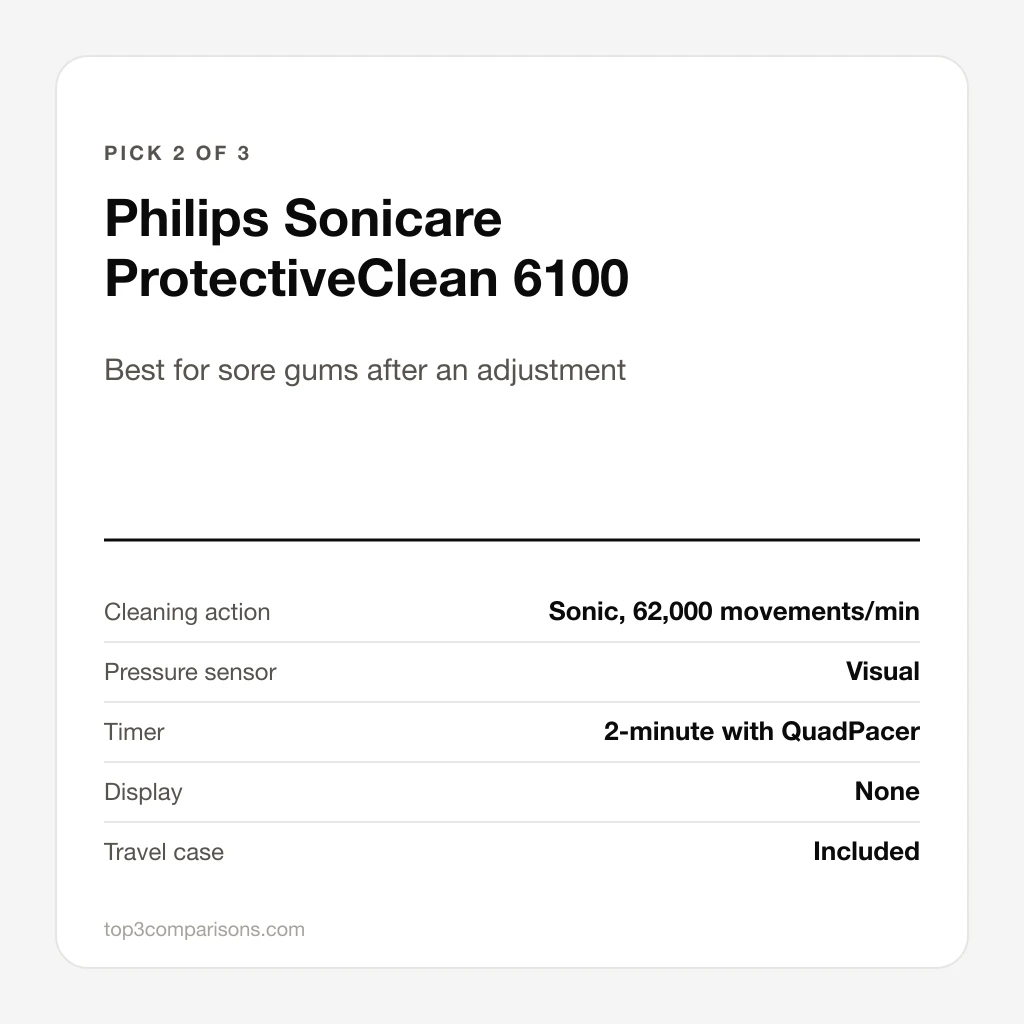
Pros
- Sonic action, up to 62,000 brush movements a minute
- Three modes and three intensities, so it can be turned down
- BrushSync tracks head wear and beeps when it is due
- Battery lasts about two weeks
- Travel case included
Cons
- Brush heads cost more than the Oral-B ones
- No orthodontic head in this range
- Larger head than the round Oral-B design
Unique Features & Insights
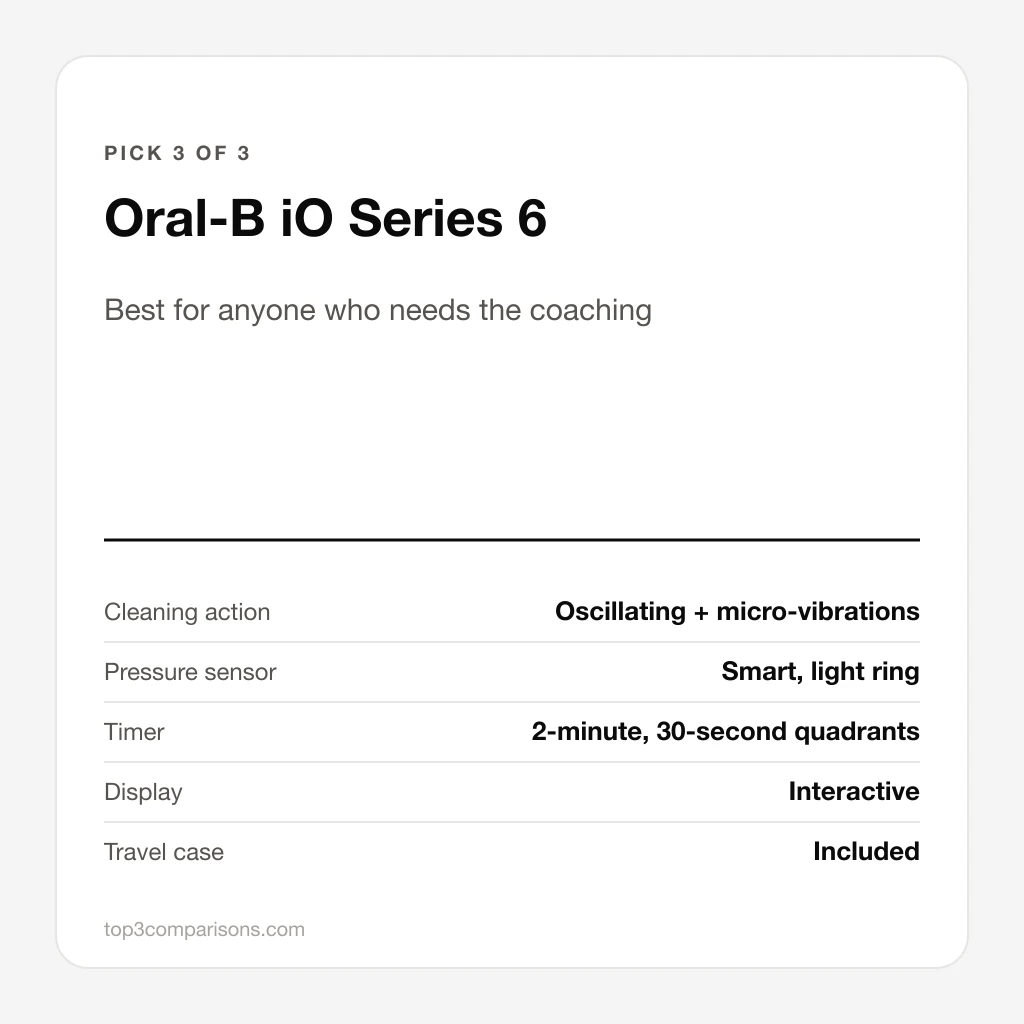
Pros
- Round head with micro-vibrations, quieter than the Pro 1000
- Five modes, including gentler settings for sensitive gums
- Smart pressure sensor with a light ring you can see while brushing
- Interactive display shows the mode and the battery level
- Takes the same orthodontic heads as the rest of the iO range
Cons
- The most expensive of the three by a wide margin
- iO brush heads cost more than the older Oral-B heads
- The coaching features are easy to ignore after the first week
Unique Features & Insights
Final Comparison Table
For most people in braces the Pro 1000 does the job that matters: the round head reaches around brackets and the sensor stops you scrubbing. Choose the Sonicare if sore gums make a gentler sonic action more comfortable, or the iO 6 if the coaching display is what keeps you brushing the full two minutes. Check current availability through the links above.
Frequently Asked Questions
Do I need a special brush head for braces?
Oral-B sells orthodontic heads shaped to sit over brackets, and they fit both the Pro 1000 and the iO 6. They are not required: Oral-B's own guidance for braces is that the round head is what lets the brush clean around brackets, wires and the gum line.
Is oscillating or sonic better with braces?
They clean differently rather than one being better. The round oscillating head of the Oral-B models works tooth by tooth around each bracket, while the Sonicare moves fluid around the hardware at up to 62,000 movements a minute. Comfort usually decides it, and sore gums often prefer the sonic action.
Why does the pressure sensor matter so much with braces?
Gums are often inflamed while teeth are moving, and the instinct is to brush harder where food is stuck. All three brushes here warn you: the Pro 1000 stops pulsating, the Sonicare shows a light, and the iO 6 turns its light ring red.
How often should the brush head be replaced with braces?
Brackets and wires wear bristles out faster than teeth alone, so the usual three months is a maximum rather than a target. The Sonicare 6100 tracks wear itself with BrushSync and beeps when the head is due.
Is an electric toothbrush enough, or do I also need a water flosser?
A brush cleans the surfaces it can reach; it does not get under the wire. Orthodontic practices generally pair a brush with floss threaders or a water flosser for that. None of the three brushes here replaces that step.
Can I use these with clear aligners instead?
Yes. Aligners come out to brush, so any of the three works, and the choice comes down to comfort and features rather than reaching around hardware.
New comparisons, straight to your inbox
Get a short email when we publish a new product comparison. No daily noise.
Related Posts
Best Travel Backpacks for Women: MATEIN vs Travelpro vs Osprey Fairview
A 19-liter under-seat pack, a 40-liter budget carry-on with a shoe compartment and a 40-liter women's-fit pack with an adjustable torso are compared on size, laptop fit and weight.
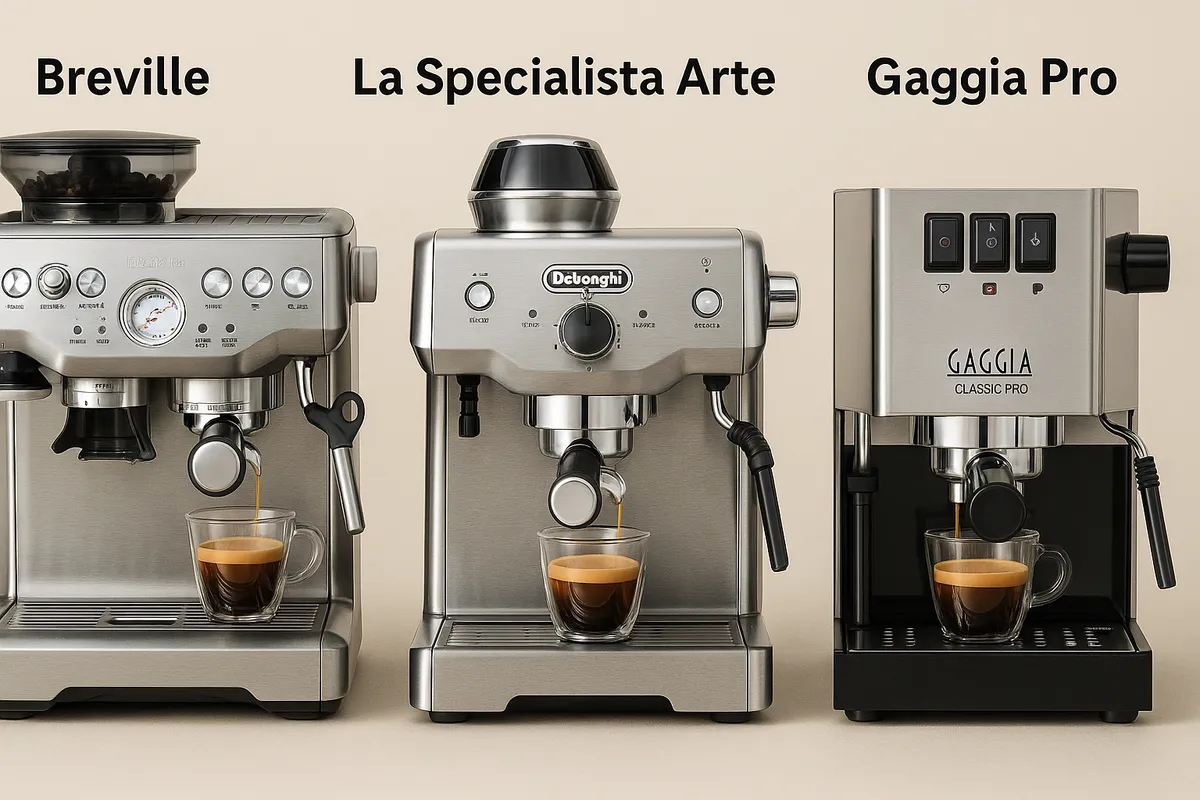
Best Espresso Machines in 2025: Top 3 Compared
Compare the top‑rated home espresso machines of 2025: Breville Barista Express, Gaggia Classic Pro, and De'Longhi La Specialista Arte.
Best Posture Corrector for Women: Top 3 Compared
Two back braces and a wearable sensor take different approaches to slouching. The VOKKA strap brace, the ComfyBrace neoprene brace, and the Upright GO 2 Premium compared for women choosing between passive support and real-time feedback.